

Bringing a new life into the world is a momentous occasion. However, the newborn arrival for some parents can take an unexpected turn.
This is where Neonatal Intensive Care Unit (NICU) comes to the fore.
As a place of incredible hope and healing, NICU provides life-saving expertise.
NICU – A Sanctuary for Vulnerable Newborns
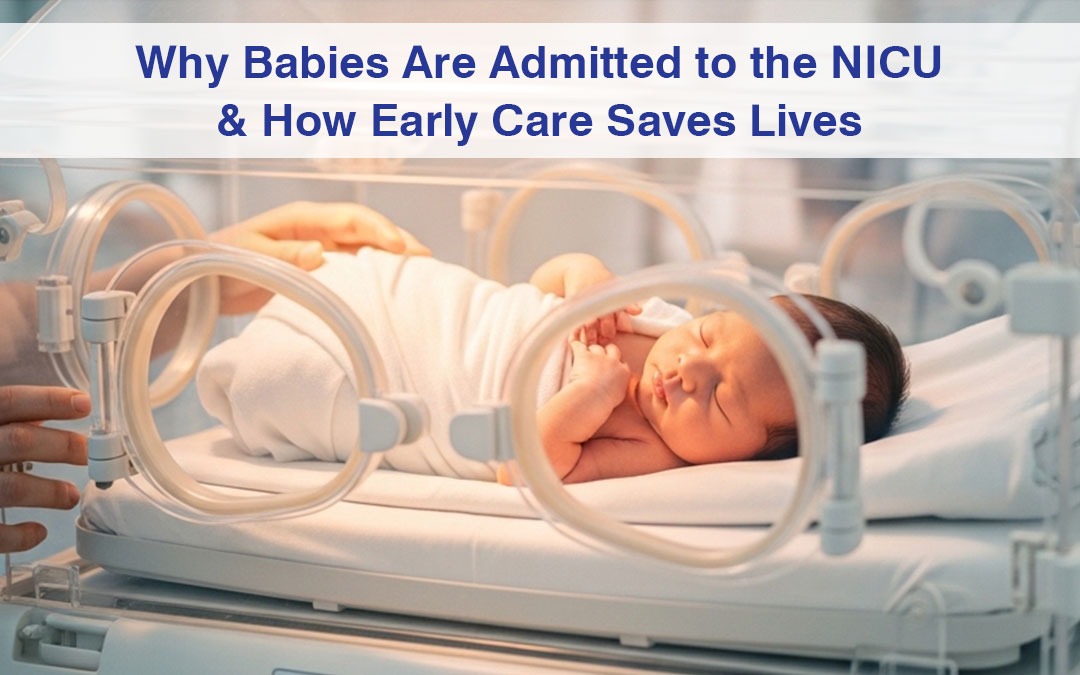
The NICU, a specialized nursery within a hospital, is specifically meant for infants in need of intensive medical monitoring and treatment.
These babies may be born prematurely. They have a low birth weight. Otherwise, they could be experiencing medical complications during or shortly after birth.
Started by a highly skilled multi-disciplinary team, NICU includes:
- Neonatologists : Pediatricians specialized in newborn care.
- Neonatal Nurses : Registered nurses with advanced training in neonatal intensive care.
- Respiratory Therapists : Specialists who manage breathing support and equipment..
- Occupational & Physical Therapists : Professionals who support developmental milestones and feeding skills.
- Social Workers & Case Managers : Offer families emotional support and logistical guidance.
Common Reasons for Admission to NICU
Every baby’s journey is unique.
However, certain factors often necessitate a baby’s stay in the NICU.
Parents by understanding the following reasons can navigate the initial shock and focus on the care their child is getting.
Prematurity (Preterm Birth)
Prematurity is worldwide the premier cause of admission into the NICU.
A baby is considered premature if it’s born before 37 weeks of gestation. This prematurity is attributed to their organs, especially the brain, digestive system, and lungs, not fully developed. As a result, these infants will require specialized support to survive and thrive outside the womb.
- Respiratory Distress Syndrome (RDS) : Premature babies often lack surfactant. Surfactant is a substance that keeps the tiny air sacs in a baby's lungs open. Without it, their lungs will collapse. This will make their breathing difficult.
- Apnea of Prematurity : Occurs when a baby stops breathing for 20 seconds or longer. They often happen due to an immature central nervous system.
- Intraventricular Hemorrhage (IVH) : Bleeding in or around the ventricles of the brain. This is more common in very early preterm infants.
Low Birth Weight (LBW)
Babies born with a weight less than 2,500 grams (5 lbs, 8 22oz) are classified as having low birth weight. This is often attributed to prematurity.
Some full-term babies are often born small for their gestational age. This is attributed to factors like maternal health issues or placental issues. As a result, these infants face challenges with blood sugar levels, temperature regulation, and warding off infections.
Respiratory Distress
Even full-term babies can experience breathlessness issues. Such babies require NICU intervention.
- Transient Tachypnea of the Newborn (TTN) : Indicates a temporary condition wherein the fluid stays in the lungs after birth. This causes rapid breathing.
- Meconium Aspiration Syndrome (MAS) : Occurs when a baby inhales into its lungs before or during birth meconium (their first stool). This causes inflammation and blockage.
- Persistent Pulmonary Hypertension of the Newborn (PPHN) : Indicates a serious condition wherein the baby’s circulation does not transition after birth properly. This causes high blood pressure in the baby’s lungs and high oxygen levels.
Sepsis and Infections?
Newborn babies have immature immune systems. They are highly susceptible to infections.
Suppose a baby displays signs of infection like fever, lethargy, or poor feeding, it’s admitted to the NICU. In the NICU, the baby is given intravenous antibiotics and also closely monitored to prevent the infection from spreading (called sepsis).
Hypoglycemia (Low Blood Sugar)
This condition is common in babies born to mothers with gestational diabetes or to those who are too small for their gestational age.
A baby might require intravenous glucose in the NICU if its blood sugar levels drop too low and are not rectified through feeding. This helps to prevent neurological complications.
Jaundice (Hyperbilirubinemia)
Mild jaundice is common in newborn babies. In severe cases where the levels of bilirubin (a yellow pigment) become dangerously high, the baby will require treatment in the NICU under special blue lights (phototherapy). This helps to prevent brain damage (kernicterus).
Congenital Anomalies and Surgical Needs
Babies born with heart defects, abdominal wall defects, or other structural issues often require immediate stabilization. In many cases, they may need surgical intervention shortly after birth.
The NICU offers the high-level monitoring that’s essential before and after these procedures.
How the NICU Saves Lives: Power of Early Care
NICU’s core mission is to serve as the ‘bridge’ between the womb and independent life.
Early intervention is the cornerstone of neonatal medicine. The care provided in the first hours and days is often the deciding factor in a child’s long-term health.
Advanced Respiratory Support
The NICU offers varied levels of breathing assistance. They range from simple oxygen masks to Continuous Positive Airway Pressure (CPAP) and mechanical ventilators.
The team, by ensuring a steady flow of oxygen and supporting underdeveloped lungs, prevents long-term respiratory damage. Simultaneously, they support brain oxygenation.
Temperature Regulation (Thermoregulation)
Tiny babies, especially those with low birth weight, rapidly lose body heat.
The NICU uses isolettes (incubators) and radiant warmers to provide a controlled environment. They ensure the baby uses the environment’s energy for growth rather than just trying to stay warm.
Nutritional Support and Growth
Many NICU babies cannot be breastfed and bottle-fed immediately. The reason for this is the babies’ prematurity or respiratory issues.
The NICU team offers:
- Total Parenteral Nutrition (TPN) : Nutrients are delivered through an IV directly into the bloodstream.
- Gavage Feeding : Indicates a small tube is passed through the nose or mouth into the stomach. This helps to deliver breast milk or formula.
- Lactation Support : Help mothers offer breast milk. This milk is ‘liquid gold’ for premature infants. Breast milk immune boosting properties make it a healthy food for infants.
Neuro-Protective Care
The NICU offers babies who experience birth asphyxia (lack of oxygen) therapeutic hypothermia (cooling therapy).
The team by lowering the baby’s body temperature for 72 hours can significantly reduce the risk of permanent brain injury and cerebral palsy.
Developmental Care & Sensory Management
The NICU environment is carefully managed to mimic the womb.
This includes :
- Clustering Care : involves performing all required procedures at once. They help facilitate long periods of uninterrupted sleep.
- Managing Light & Sound : Involves keeping the unit quiet and dark. This helps protect the baby’s developing nervous system.
- Kangaroo Care : Involves encouraging skin contact between the baby and parents. This helps stabilize heart rates, improve oxygen levels, and promote bonding.
Looking Ahead: Life After the NICU
Every NICU team’s goal is to get the baby healthy enough to go home.
The graduation day is a major milestone. But the care does not stop there.
Most NICU graduates require follow-up care with:
- Pediatric Specialists : Includes Cardiologists, Pulmonologists, etc.
- Developmental Pediatricians : Involves the task of monitoring growth and milestones.
- Early Intervention Programs : Involves encouraging skin contact between the baby and parents. This helps stabilize heart rates, improve oxygen levels, and promote bonding.
Final Word
The NICU is a testament to modern medicine’s remarkable advancements.
The journey for parents can be frightening. Thankfully, the combination of high-tech intervention and compassionate, early care has been a blessing. They have revolutionized the survival rates and long-term outcomes for the world’s smallest patients.
Take one hour at a time if your baby is in the NICU.
Lean on your medical team’s expertise; and Use the available support services.
Remember every small win and every breath taken independently is a massive achievement. They’re a step forward to bring your little one home.