

Ovulation induction for irregular ovulation treatment
Ovulation Induction
Ovulation induction is the process in which medications are used to stimulate ovulation in women who have irregular or absent ovulation, termed medically as anovulation.
About 25 to 30 percent of women with infertility have problems with ovulation. The main aim of ovulation induction is to increase a woman’s chances of conceiving, either through sexual intercourse, intrauterine insemination (IUI), or another fertility treatment.
Ovulation induction is usually one of the first-line treatments used for infertility because it is non-invasive and relatively low-cost compared to other fertility treatments. Women with PCOS who have irregular ovulation greatly benefit from ovulation induction.
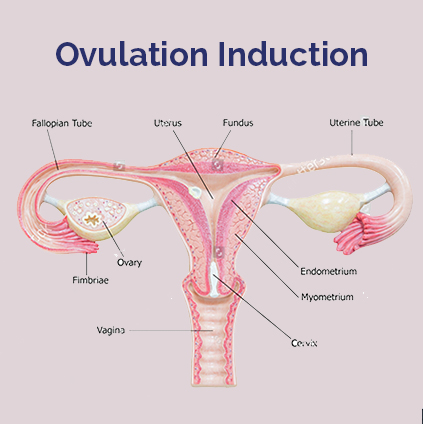
Steps In Ovulation Induction

Step 1
Oral agents such as Clomiphene or Letrozole, or injectable gonadotropins, are used to develop the eggs in the ovaries (egg bags).

Step 2
Serial transvaginal ultrasound scans are performed to monitor the growth of the follicles regularly. This is known as follicular tracking. Usually, three to four scans are needed.

Step 3
Once the follicles reach 18–20 mm, the patient is given an HCG trigger injection for follicular rupture and egg release. The patient is then advised to have timed intercourse, or IUI may be planned.