

Preimplantation Genetic Testing | PGT A and IVF Success
Preimplantation Genetic Testing
Preimplantation genetic testing for aneuploidies (PGT - A) formerly known as preimplantation genetic screening (PGS) is a screening test used to check if genetic or chromosomal abnormalities are present in embryos created through IVF or ICSI before embryo is transferred.
Chromosomal aneuploidies are one of the major causes of infertility and maternal age-related lower pregnancy rate. PGT - A helps to shorten the time to a pregnancy by reducing the need of multiple IVF cycles. Transfer of euploid embryo results in higher pregnancy rates and live birth rates reducing miscarriage risk.
Indications of PGT-A
- Advanced maternal age: 35 years and above.
- Recurrent miscarriages: Women with two or more miscarriages.
- Recurrent IVF failures: Two or more IVF failures
- Severe male factor infertility
Benefits of PGT-A
- Reduced miscarriage rates.
- Higher pregnancy rates per transfer.
- Allows identification and transfer of embryos free of aneuploidy
- Reduces the time to achieve a pregnancy
Procedure
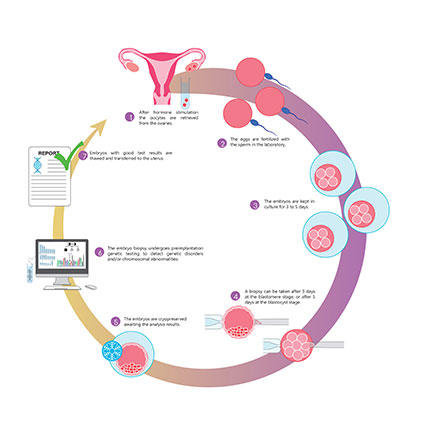
Following the process of egg retrieval and fertilization with the sperm via the ICSI or IVF procedure, the embryos are allowed to grow in the lab for upto 5 days.
A biopsy of a few cells from is taken and sent for genetic testing. Usually it takes few days for the results of the tests to be available, so all the biopsied embryos are frozen.
We will be able to identify the chromosomally normal embryos which will then be transferred into the uterus via a frozen embryo transfer cycle to achieve a healthy pregnancy.
The embryos with chromosomal abnormalities are discarded.
Preimplantation Genetic Testing - M
PGT - M is a procedure, which is used to identify genetic defects within embryos. It is used when one or both the parents have a known genetic disease or disorder that can result in genetic disease in the child or the couple already has an affected child, so that a healthy offspring can be born. This technique can be used to prevent certain genetic diseases or disorders from being passed on to the child.
Some of the couples that can benefit are: Carriers of chromosomal disorders, Sex linked genetic disorders and Single gene disorders.
PGT - M can be done for genetic disorders such as Duchenne muscular dystrophy, neurofibromatosis, sickle cell anemia, Leigh syndrome, retinoblastoma, hereditary inclusion body myopathy, cardiac disorders, and carriers of BRCA1.
We also have several pregnancies in couples carrying mutations for beta thalassemia.
Frequently Asked Questions
Find answers about Preimplantation Genetic Testing (PGT-A and PGT-M) and advanced fertility care at Southern Gem Hospital in Hyderabad.
What is Preimplantation Genetic Testing (PGT-A)?
Preimplantation Genetic Testing for Aneuploidies (PGT-A), formerly known as Preimplantation Genetic Screening (PGS), is a screening test used to check if genetic or chromosomal abnormalities are present in embryos created through IVF or ICSI before the embryo is transferred. Chromosomal aneuploidies are one of the major causes of infertility and maternal age-related lower pregnancy rates. PGT-A helps to shorten the time to pregnancy by reducing the need for multiple IVF cycles.
What is the difference between PGT-A and PGT-M?
PGT-A (Preimplantation Genetic Testing for Aneuploidies) screens embryos for chromosomal abnormalities such as extra or missing chromosomes. PGT-M (Preimplantation Genetic Testing for Monogenic Disorders) is used to identify specific genetic defects within embryos when one or both parents have a known genetic disease or disorder such as thalassemia, muscular dystrophies, sickle cell anemia, or BRCA1 mutations.
Who needs Preimplantation Genetic Testing?
PGT-A is indicated for advanced maternal age (35 years and above), recurrent miscarriages (two or more), recurrent IVF failures (two or more), and severe male factor infertility.
PGT-M is indicated for carriers of chromosomal disorders, sex-linked genetic disorders, and single-gene disorders such as thalassemia, muscular dystrophies, sickle cell anemia, Duchenne muscular dystrophy, neurofibromatosis, Leigh syndrome, retinoblastoma, hereditary inclusion body myopathy, cardiac disorders, and BRCA1 mutations.
What are the benefits of PGT-A?
The benefits of PGT-A include reduced miscarriage rates, higher pregnancy rates per transfer, identification and transfer of embryos without detected aneuploidy, and reduced time to achieve a pregnancy by avoiding multiple IVF cycles.
What is the procedure for Preimplantation Genetic Testing?
Following egg retrieval and fertilisation via IVF or ICSI, the embryos are allowed to grow in the laboratory for up to 5 days. A biopsy of a few cells is taken from each embryo and sent for genetic testing. As the results take a few days, all biopsied embryos are frozen. Chromosomally normal embryos are identified and transferred into the uterus through a frozen embryo transfer cycle. Embryos with chromosomal abnormalities are not selected for transfer.
Does Southern Gem Hospital offer PGT for beta thalassemia?
Yes. Southern Gem Hospital, Hyderabad has several successful pregnancies in couples carrying mutations for beta thalassemia using PGT-M. The hospital holds the special PCPNDT certification required to offer Preimplantation Genetic Diagnosis. For appointments, call +91 40 6658 5555 or +91 80964 14440.
Is Preimplantation Genetic Testing available at Southern Gem Hospital Hyderabad?
Yes. Southern Gem Hospital, Hyderabad offers both PGT-A and PGT-M at its Basheerbagh and Banjara Hills branches. The hospital holds the special PCPNDT certification/licensing required to offer this highly specialised procedure. The treatment is performed by Dr. Sweta Agarwal, Director of Fertility and Gynaecology. For appointments, call +91 40 6658 5555 or +91 80964 14440.